Jamaican Roots

Jamaica is a relatively small island but it contains a wealth of tonics.   Health consciousness permeates almost every aspect of the culture.  You can’t eat anything in Jamaica without being reminded of the health benefit or reason for eating it.

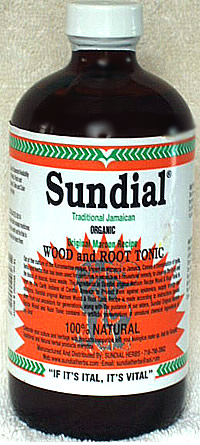
One popular beverage is called ‘Roots’.  It comes by many colorful and descriptive names.  If you look for ‘Wood Root’ or ‘Roots’, you should be able to find it.  One very popular one is this one:

Popular Root Drink
Popular Root Drink

There are about as many different formulations as there are names for this drink.  Some are extremely bitter.  Some are sweetened and fermented.

Jamaicans say these drinks are ‘good for the back’.  You need a strong back to accomplish things in life, among other things.

Try it and report back!

Horny Goat Weed?

Despite it’s unfortunate name (who wants to bring this stuff to the counter), Horny Goat Weed or Epimedium, is an amazing chinese herb.  Bodybuilders take it for increased testosterone (weak anecdotal evidence) and for the ‘pump’ (very strong evidence).  It’s also thrown into herbal preparations for PDE-5 inhibition effects (very strong scientific evidence).

I like to check http://www.pubmed.com for scientific experiments related to the herbs and supplements I’ll be discussing here.

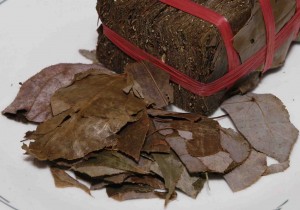
It’s very cheap as a raw herb you can purchase in any chinese herbal shop or over the net.  It’s basically dried leaves packed tightly into little bricks that resemble a pack of dollar bills.

Epimedium
Epimedium

Scientists have found that it has strong Estrogenic qualities.  What??  Yes, despite all the hype around male performance, it has been shown effective for woman going through menopause and for the prevention of Osteoporosis!  Check out pubmed for the studies.

One substance that has been isolated from epimedium is a chemical called icariin.  Again, check pubmed for this one.  It’s PDE-5 inhibition rivals viagra.  In fact, one study mentioned how they were working on derivatives of icariin to produce even more effective inhibition.  Do your research!  Check pubmed, don’t just believe me.

Despite all the clinical evidence pointing to epimedium being estrogenic, this herb has a strong reputation for being a testosterone booster.  I think it’s probably due to it’s PDE-5 inhibition that get misinterpreted as libido enhancing.  Another possibility is that the body absorbs these natural weaker estrogens instead of the dangerous estrogens purported to be in our drinking water, detergents and certain food additives.  So it could have a protective effect against those dangerous substances.  I haven’t studied the estrogen story in depth, but there seems to be strong suggestions that our environment is polluted with toxic estrogens.

Eucommia Ulmoides

This herb always caught my eye in the herbal shops.  It has a really odd name too–Eucommia Ulmoides.

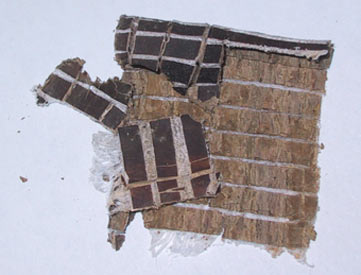
Rubbery Chinese Herb

The chinese name is “Du Zhong“.

This is an herb that could be made into a tea without any additional herbs.  It can stand on it’s own.  Traditionally, it’s used to lower blood pressure (read Nitric Oxide).  Interestingly enough, it’s also used to treat back pain and weakness of the legs.  It’s recommended for muscle/tendon injuries and impotence.

Look at the picture closely. The white fibrous part is reputed to be the reason why it is good for our fibrous muscles and tendons.  The herb has a rubbery feel to it.

One traditional recipe is to boil it with Oxtail for a stew.  Don’t use too much.  I’ve ruined a few soups by putting too much Eucommia in it.  It doesn’t taste very good.  I found powdered Eucommia and a teaspoon mixed with tea is not too bad, you can barely taste it.

I haven’t really tested this one.  I do have an injury I can try it on. I’ll see how it goes.  If anyone else wants to committ to trying this one and report back please do!

A Secret Revealed

I was thinking the other day about how much real information is really available in printed form and on the net.  I was involved for many years in studying martial arts, especially the mysterious internal martial arts mainly from China — Tai Chi Chuan, Xing Yi, Bagua etc.  What I like about these arts is that they tend to have associated health preserving practices often loosely labeled ‘Qigong/ChiGong/ChiKung‘ or ‘Nei Gung’.  These exercises are loosely translated as ‘breathing exercises’ or ‘Inner Work’.  There are some purists who will argue every statement made concerning these arts and practices.  I always found them fascinating, especially the idea of a practice that could guarantee youth and vitality well into advanced age.  One can find alot of books on these arts and introductory classes.

Chen Fake
Chen Fake

Unfortunately, the secret ingredient to make them work is not found in any of these books or on the net.  If you want to learn from books and from introductory classes, you will not learn the true practice.  I spent many many years and have yet to find the real secret.  I’ve had a lot of  secret stuff revealed to me, but it’s never the full story.  I have had enough secret information revealed to me to know every book and video out there is pretty much useless.  You will get hints from your teacher, but the only way is to stumble upon yourself.  And that’s why we practice and practice. 

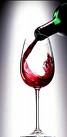
But I will give you one secret a Chinese Herbalist revealed to me one day that I haven’t seen anywhere.  For the tonic herbs, mix a little red wine in the resulting tea to magnify the effects.  I thought this was a cool revelation, although minor, of the oral tradition only insiders get to witness.  I humbly pass it on to you.

Red Wine

Notice the swirl?  That’s a hint for another secret…..

Gray Hair Experiment

One of my all time favorite tonics is something called ‘shou wu chih‘ and it’s found in any chinese herbal shop or asian grocery. It looks like this:

The main ingredient in Shou Wu Chih is an herb called polygonum multiflorum. There’s a raw version of this herb that is sold in many herbal tablets for hair loss and graying.. However, traditionally, the raw herb is specially prepared by boiling it in a broth made primarily of black soy beans and then carefully dried. Many people don’t know this, but if you’re interested in this herb for it’s reported hair benefits, you want the prepared herb, not the raw version.
This herb is also called FoTi and He Shou Wu. You’ll probably encounter just as many spellings and pronunciations as you can imagine. You’ll also find countless variations of the legend that states a person who was gray haired and really old, ate this herb and became young again with dark black hair. I’m told in chinese, he shou wu means something like ‘mr. he black hair’.
Many people familiar with Chinese Medicine take this tonic everyday in hopes it will either darken their hair or keep it from turning gray. There is another benefit–this is also a very good overall tonic that is supposed to benefit the ‘Jing‘ if you are depleting your energy from stress or other activities (read my post on Jing-Chi-Shen).  It’s purported to be a reliable youth tonic and powerful libido enhancer.  I really like the taste of this one.  There are two versions–one made with alcohol (it’s labeled ‘cooking wine’ in some stores) and one made with water.

I could go into all the other ingredients, but you could google it. There’s a wealth of information on it.

The Experiment

So, I’m not happy that I sprouted some gray hair on my temples and scattered throughout what used to be very black hair.  I’m going to take this everyday and report on results after a few months.  If I see some gray hair with dark roots coming in, I will claim this a success.

I’m thinking about picking this up as well:

Shou Wu Extract
Shou Wu Extract

Shou Wu Pian is a concentrated version of the single herb in a small black pill.  It’s supposed to be taken for a long period of time to see results.  I think I may add this to the regimen.

The products are in my amazon store on this page.  Your best bet if you live near a metropolitan area or asian community is to buy it yourself.  These products are inexpensive.  Try my links or search the web for a better deal.  In the future, I may setup a store.  Let’s see…


Nitric Oxide – The Great Unifier

I consider Nitric Oxide the great unifier. If you do research on just about any tonic or elixir, I bet you will find a nitric oxide connection. Korean Ginseng? Enhances Nitric Oxide. Jiaogulan Tea? Nitric Oxide. Honey? Yep, Nitric Oxide. Acupuncture? Nitric Oxide.  Vitamin C?  I could go on, but you get the point. There are a ton of books and internet articles on Nitric Oxide. I don’t want to repeat that information here or begin a biology/chemistry lesson.

We will be talking about it alot on this quest. This is a good book for information on nitric oxide:

I’ll mention a few things that I think are important. First, if anyone says they understand Nitric Oxide, I think they are lying. It’s been studied alot, however, it seems like people are still figuring this thing out. To get through alot of the information, you need a PhD in biochemistry. That’s why the book above is a good introduction. It was written by one of the guys who put alot of the pieces together and is viewed as one of the discoverers of it–and won a nobel prize for it.

What I do know about it, is that it is involved in helping arteries expand, which in turn improves blood flow and reduces blood pressure. However, that’s extremely simplistic. To make it more complicated there are several forms of it. Scientists are constantly finding new ways it is used in our bodies and the role it plays in disease and health. It has roles in inflammation modulation, blood flow, hair growth, diabetes, hormone release, brain health and even erectile function :O to name just a few things.

Alot of chronic diseases thought to be normal aging are probably caused by our inability to produce enough nitric oxide. Many prescription drugs, like viagra for example, increase nitric oxide by blocking the enzymes that help break it down in the body. There other techniques to increase nitric oxide production by ingesting  the substances that produce it. For example, the amino acid arginine or nitrates from vegetables (yes, nitrates may not be so bad after all).   You can teach your body to produce more by exercise.

Another interesting aspect of Nitric Oxide is that it is a toxic gas that kills viruses and bacteria. In fact, there were some studies that showed producing enough of it killed tuberculosis and scientists were recommending eating peanuts (high in arginine and probably nitrates) to help ward it off. 

As with everything, too much is probably bad and there is some evidence that overproduction probably causes alot of damage in our bodies. That’s why you will see nitric oxide products with liberal doses of antioxidants included. 

Bodybuilders have caught on to this and you will find a wealth of products claiming to boost nitric oxide. These products help the muscles swell up with blood. If you examine the ingredients, you will find a basic formula: amino acids that provide the ‘food’ for nitric oxide and herbs/chemicals that slow or prevent it’s breakdown or speed up it’s production. Read the labels on these products for clues on the next big elixir to try.

I’ll be writing more on this in future posts…

Extracts vs Powders

I recently went to visit a local Chinese Herb shop to get an herbal ‘tune-up’.  Many years ago, I found a great chinese herb shop and whenever I felt rundown, I would get my pulse read by the old resident herbalist and he would write out a prescription for the pharamacist to combine together and grind up.  I would then boil the ground up herbs and drink a cup twice a day.  I always felt like a million bucks afterwards and I recommended them to all my friends and family.  Unfortunately, the place burned down one night and I never saw or heard from them since.  I haven’t been able to find a good herbalist since. 

Anyway, I tried out this new place and when I went to pick up my herbs, I got a bunch of packets of powder I was supposed to mix into a cup of hot water and drink.  The herbalist told me this was the new way to dispense herbal prescriptions.  I didn’t really like this, but decided it was worth a try.

Extracts have some merit.  Always make a note if you are dealing with a raw herb or with an extract.  Extracts are just that..alcohol or water or some other chemical extraction of the chemicals in the herb.  Extracts are very potent and come in varying strengths such as 5:1, 10:1, 100:1 etc.  Extracts are usually standardized to contain a certain percentage of the known active chemical, which I guess makes it more like a drug, but guarantees you are getting a standard and expected dose.  As an example, I don’t think 500 mg of powdered gingseng is going to have much effect on anyone, but 500 mg of a powerful ginseng extract certainly could.

The problem with extracts is that they could be missing important chemicals that are not understood or known that are vital.  I always felt a water extract would miss chemicals that were not water soluble or an alcohol extract could miss ingredients as well.  But I’m not a chemist, so I’m not really sure about that.  I’ve noticed really powerful effects from extracts (which I’ll go into detail in future posts) so I know they work.  At the same time, I’ve had great effects from boiling bulk herbs too.  I can’t really think of a good experience with a raw powdered herb off the top of my head, I think they are largely ineffective because the dosage is so small.

In either case, one is probably not always better than the other and each will have it’s place.  For now, just make sure you know what you’re dealing with and what you’re paying for.   Read those labels to see if you’re getting an extract or just a few milligrams of a powder.

Oh, and my experience with that new herbalist was terrible.  I don’t think mixing individual extracts of the herbs into hot water is the same as the raw herbs.  I didn’t feel better, in fact I felt worse and threw the rest out.  I’ll never go back there.

By the way, and this is a topic for another post, I don’t think the herbs we get now are anywhere near what they used to be in the ‘old days’.  But I digress…

Chyawanprash — Ancient Elixir From India

Chyawanprash is a well known tonic from India.  It can be found in almost any indian grocery.  It looks like this:

It’s a combination of various herbs and spices (depending on source) but they all should have a base of honey and clarified butter, called ‘ghee’.  It has an odd sour and sweet taste.  Some formulations could have up to 80 ingredients, according to Wikipedia.

Everyone I speak to from India knows about this tonic and many say they were forced to take it when they were young.  One person told me it was to build muscle and make someone strong.

I’ve tried it and I have to admit I didn’t feel any immediate benefits from it.  For some reason, I just can’t commit to taking it regularly enough to say one way or the other.  I think it’s an interesting tonic because the principle ingredient is amla, which is supposed to be a powerful antioxidant.  I also noticed it contains tribulus, which is another herb touted to improve testosterone levels. 

I’m including Chyawanprash because of it’s popularity and to see if anyone has any direct experience with it to say ‘yay or nay’.  There’s a ton of marketing material on this one, so it’s difficult to sort through what’s real and what’s hype.

Alopecia Areata Cured!

Although it’s not a life threatening condition, Alopecia Areata (patchy baldness) can cause sufferers much anguish and distress. I first noticed a golf ball size bald patch on the back of my otherwise thick hair when I was about 17. The doctor said it was stress related and gave me some cortisone shots in the area. A couple months later, the hair grew back in quickly.

I wish that was the end of the story. In retrospect, I was lucky. Many people with alopecia areata lose all their hair all over their body. I just had one bald spot and it grew back.  A year or two later, I got another spot and then a couple other smaller ones.  Back to the dermatologist for shots.  However, this time the hair started to take some time to grow back.  In my twenties, I got new bald spots in different areas just about every year.  I had odd thin patches that came and went as well.  Sometimes the spots would not fill back in after the cortisone shots.  My last dermatologist wanted to take a biopsy but I refused.  I had every blood test imaginable taken.

Everytime I went to a new barber, he/she would remark that the last barber butchered my hair.  “No, ” I would sigh, “that’s how it grows.”  I started to go to one barber who specialized in cutting the thicker areas shorter than the others.

I also suffered from canker sores pretty regularly.  I was heavily involved in martial arts and whenever I recieved a cut inside my mouth, I’d get a painful canker for about 10 days.

When I had my last bout about 4 years ago, I broke down and bought a product to hide the spots.  It was a black powder that worked pretty well except it would rub off on anything I happen to brush my head against, like a head rest or pillow.  However, this product, Dermatch from Dermatch Inc. was a life saver.

Believe me when I tried almost everything — i tried chili peppers, topical steroid gels–I can’t even remember everything, but if it’s out there, I’m sure I tried it.

But something did work — for me.  I completely cut gluten out of my diet.  Yes..no bread, no pasta, no Pizza!  It’s one of the hardest things I had to do, but it seems to be working.  4 years and not one bald spot.  All the thin spots filled in (which never happened for over 20 years).  My better half says my hair is like a ‘carpet’.

And guess what?  I never get canker sores either.

There is one more thing I added, which I feel is related.  I started taking a Fish Oil supplement morning and evening religiously exactly when I stopped the gluten.

This is the one I take:

I know this is not scientific, since I did both things at the same time.  But I’m not willing to test stopping the fish oil to know for sure.  In my mind, if you suffer from this problem, try the gluten-free diet and the fish oil together.  An added benefit is that the fish oil helped improve my lipid profile immensely.  I’ll go over that detail in a future post.

Let me know what you think.
Jing Chi Shen

As I come across interesting theories and paradigms, I’ll be writing about them here.

One very helpful paradigm for comparing items on this site comes from  Traditional Chinese Medicine (TCM) and it’s view of the body’s energy system.    In TCM, there are three concepts called ‘Jing Chi and Shen‘.  There aren’t very good english equivalents for these terms, but loosely translated, ‘Jing’ means the core energy you were naturally alloted at birth.  One can think of this as the size of your energy battery you are given.  There are alot of really esoteric ideas concerning how this  ‘Jing’ size is determined but it largely is inherited from the parents and the circumstances around conception.  Interestingly enough, this concept is not unique to TCM, but is found in many Spanish cultures as well.  The bottom line is, according to this theory, when your Jing starts to fall short, you grow old and eventually die.  We’ll be looking at strategies to make the most of our Jing on this site.

Next is ‘Chi‘.  I’m sure everyone has heard of ‘Chi’ and it’s alternate spelling, ‘Qi‘.  Chi can be thought of as your energy level and ability to accomplish things in the world.  People who get a lot done and rarely get sick are said to have alot of ‘chi’.  Chi is also thought of as the ingredient of the flow of ‘energy’ in the body (primarily via fascia)  and many TCM doctors aim to get this flow properly balanced in the body through herbs, acupuncture, etc.  The amount of Chi we have can be augmented by diet, certain practices (which we’ll be exploring too) and through sleep.  However, the amount of basic Jing is an important driver for how much Chi someone has (according to this paradigm).

Just to be clear, I’m not crazy about vague terms like Jing Chi Shen, but just bear with me.  I think this is a good model to have in our arsenal for the quest.

The last concept, ‘Shen’ is loosely translated as ‘Spirit’.  This is often seen in the eyes and people call it ‘charisma’ or ‘aura’.  How much chi you have drives your spirit and charisma.

In TCM, many herbs are said to operate on one or all of these levels.

A very common analogy is a candle.  The wick is compared to Jing.  The wax is compared to Chi and the flame is compared to Shen.

I read this book many years ago and found it to have a good explanation of these concepts and pretty decent overview of many herbs and tonics medicines from China.

Cured Brain Fog!

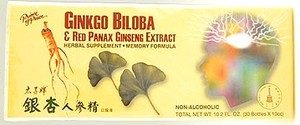
I wanted to share a supplement I found that I feel has helped cure brain fog. Of course, if you read my inaugural post, it could be just a coincidence, so I’m putting this out there to see what others think. I was experiencing extreme brain fog after some stressful life circumstances. Thinking it was tied to allergies, I took Claritin to no avail.   I tried several other supplements to address this problem including choline and phosphatydilserine, but nothing seemed to be working. Until I came across this at the local asian supermarket:
Gingko Ginseng

I took three vials a day, which provided a whopping 7.2 grams of Gingko Biloba Leaf Extract and 1.5 grams of Red Panax Ginseng Root.

This is a liquid extract in a vial.  The box comes with little straws and a plastic tool to puncture them.  The other ingredients are honey, water and less than .05% alcohol.

In about three days, I noticed the brain fog was lifted and my mood improved.  I know from experience that both Gingko and Ginseng boost dopamine levels.  I was pleasantly surprised to find my thinking clear and my concentration improved.

I did some light research on this later and found the combination of ginseng and gingko has been studied pretty extensively.  Check out:  http://findarticles.com/p/articles/mi_m0ISW/is_2002_June/ai_86387585/  for some interesting studies.

This one is a keeper for me.

Must Read This Book

I wanted the first post to set the tone for how information on this site is to be read and for how we should approach any strategy or recommendation we may come across.

Nassim Nicholas Taleb wrote a ground-breaking booked called ‘Fooled By Randomness’ that should be on everyone’s bookshelf.

In this book, which is a difficult read I must admit, he explains how much of what we think is obvious ’cause and effect’ can actually be randomness.  Many of us don’t truly understand randomness.  Randomness contains patterns and clusters by it’s very nature.  Much of what we think is caused by our skill or foresight can simply be just luck.  Many doctors and scientists are fooled by randomness when they perform experiments or test theories.  It’s hard not to be fooled, especially when we are puffed up with confidence and believe something strongly.  However, mathematics doesn’t lie and after reading this book, your ideas will change.

So as we test theories, supplements and practices in our journey, let’s always keep a level head and a skeptic’s critical thought process.

Don’t be fooled by randomness!